Based on field reporting conducted in Lebanon’s West Beqaa Valley, this article examines the growing disconnect between international refugee return frameworks and the realities shaping decision-making among displaced Syrians living in Lebanon. Drawing on interviews with Syrian youth, educators, and families within informal settlements, the piece argues that refugee return is not primarily determined by formal incentives or political messaging, but by material conditions such as housing, infrastructure, employment, healthcare, and long-term stability.
While international actors increasingly frame return as a viable policy outcome following political developments in Syria, many refugees continue to evaluate return through the lens of everyday survival rather than geopolitical progress. The article further explores how information gaps, declining trust in formal return initiatives, and mounting pressure within host states have transformed return into a constrained calculation under uncertainty. Accompanied by original field photography from Jurahiya settlement and the Jusoor Education Center, this piece centres the lived realities behind one of the region’s most enduring displacement crises.
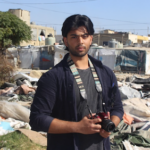
This article draws on in-person interviews conducted in October 2025 at the Jusoor Education Center in Jurahiya, an informal Syrian refugee settlement in Lebanon’s West Beqaa Valley. Interviews were conducted with a translator present; some names have been changed for safety.
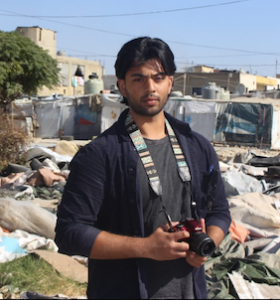
Photos by the author.
In Lebanon’s Beqaa Valley, return to Syria is not an abstract question.
It is a decision made under pressure.
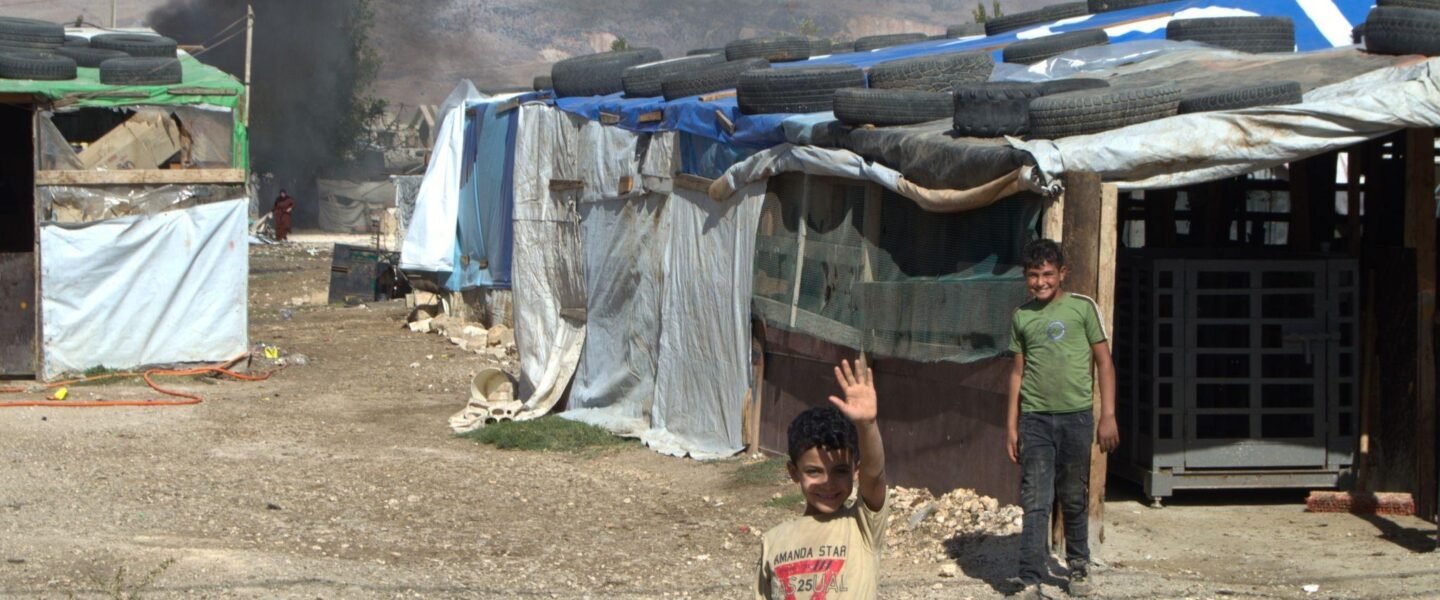
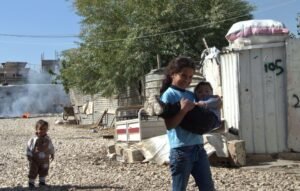
Rahaf El Natour is 18 years old, sitting inside a classroom at the Jusoor Education Center in Jurahiya, an informal Syrian settlement in the West Beqaa Valley, roughly 27 miles from Damascus. Rahaf arrived here in 2012, at four years old. Nearly her entire life has been spent in exile. Outside, rows of makeshift shelters stretch across the valley floor: corrugated metal, tarps, and concrete fragments patched together into something resembling permanence.
In the next room, water boils over a small burner. The sound spills into the classroom as she speaks. Rahaf keeps her eyes low, adjusting her hijab when asked about returning to Syria. She does not speak in abstractions: no politics, no ceasefires, no reconstruction plans.
“Essentials must be improved,” she says. “You cannot live in a country without water.”
She says it as a fact, not an opinion.
When asked if she would return, she hesitates. Then she says yes.
Not because Syria is ready, or because of any policy or formal program, but because her family will go.
Rahaf has never heard of any UN-supported return plan.
In the Beqaa Valley, she is not alone.
Return is not experienced as a structured pathway shaped by international policy. Instead, it is a decision shaped by pressure, incomplete information, and whether life in Syria is materially viable.
This gap between how return is designed versus how it is lived reflects a deeper misalignment between policy assumptions and on-the-ground realities. Until return frameworks account for how refugees actually assess viability, they will remain disconnected from the decisions they are meant to shape.
Return Pressure and the Limits of Host States
More than a decade into the Syrian conflict, displacement across the region has hardened into a structural condition rather than a temporary crisis. Lebanon, Jordan, and Türkiye continue to host some of the largest Syrian refugee populations globally, but the costs of doing so – economic, political, and social, have accumulated over time.
In Lebanon, those pressures are visible in everyday life: rising rent, strained public services, and a labour market where competition has intensified at every level. The country’s economic collapse has accelerated this shift, transforming refugee presence from a humanitarian concern into a central issue within Lebanon’s domestic economic and political debates.
These pressures are especially visible among Lebanese youth, who experience refugee presence through the lens of jobs, rent, and national exhaustion.
Tarek, a student at the American University of Beirut, frames it bluntly:
“There’s too much blame on the Lebanese government. The real issue is that we’ve carried this crisis for too long.”
Another student at the American University of Beirut said:
“Syrians compete with Lebanese for jobs. It’s hard to find work when they’ll take lower pay.”
These perspectives show how displacement becomes politically charged inside host states. As economic pressure builds, refugee presence is increasingly viewed as a source of competition over housing, jobs, and public services.
In this context, return becomes attractive to host governments as a method to relieve domestic pressure.
The Promise and Limits of Incentivised Return
In response to mounting pressure on host states, international actors have promoted voluntary return through structured programs designed to make going back to Syria more feasible. These initiatives offer financial assistance, logistical support, and coordinated pathways intended to reduce the barriers to return.
One such plan, reported by Reuters and facilitated by the United Nations and the Government of Lebanon, outlines a clear incentive structure: returning Syrians would receive $100 per individual in Lebanon and $400 per family upon arrival in Syria. Transportation costs would be covered, and border fees waived.
On paper, the logic is straightforward: reduce the cost of return, and movement will follow.
However, this model assumes that cost is the primary barrier.
In the Beqaa Valley, it is not.
In interviews conducted in Jurahiya in October 2025, multiple refugees were either entirely unaware of such programs or had only encountered them informally, often just days before.
“I don’t know about any UN plan,” said Faraj al Isa, 23. “Here, it’s safer. There are jobs. In Syria, nothing is available.”
Others expressed skepticism even when they had heard of the initiative.
“We don’t believe in it. We don’t want to go back,” said Raith al Haji, 21.
Even among those aware of return programs, there was little indication that they meaningfully shaped decision-making. Financial incentives, while tangible, are weighed against far more immediate concerns, such as housing, employment, safety, and access to basic services.
Against those realities, repatriation programs carry limited weight.
A Structural Information Failure
The disconnect between policy design and lived experience points to a deeper structural issue: return frameworks are not reaching or convincing the populations they are intended to influence.
Policy assumes awareness, trust, and engagement. In the Beqaa Valley, none of these conditions reliably exist together.
Information about return policies moves informally through word of mouth, fragmented conversations, and secondhand accounts. Some refugees encounter these programs only days before being asked about them. Others do not encounter them at all.
What this reveals is a structural failure on two levels.
The first is informational: policies are not communicated in a way that consistently reaches their intended audience. As a result, awareness is uneven and often delayed, limiting the ability of these programs to shape decision-making.
The second is one of credibility. Even when understood, these programs are not trusted because they do not align with observed conditions on the ground. Refugees rely on firsthand accounts, family networks, and direct observation to assess whether return is viable. These sources often contradict official narratives of stabilisation, particularly when it comes to housing and infrastructure.
“Some families have already visited Syria recently,” said Rania (name changed), a teacher at the refugee education centre. “They went, saw it with their own eyes, and came back to decide what to do next.”
Return is tested, evaluated, and often reconsidered based on what refugees encounter on their own. These visits do not necessarily lead to return, but reinforce hesitation, as families confront the gap between expectations and actual conditions.
Return as a Material Calculation
Across interviews, one pattern is consistent. Decisions are shaped by material conditions, including housing, healthcare, employment, and infrastructure. The question now is whether return is livable.
For many, the answer remains no.
“Syria is not stable for us to go back to,” says Faraj.
What he describes is a clear threshold; return is only possible when stability translates into functioning daily life. In the absence of that, the decision is effectively made.
“There are no homes in Syria,” Raith added. “Even if we have money to go back, houses are very expensive.”
In one conversation, Faraj gestured toward the nearest hospital as he spoke, contrasting it with conditions in Syria, where access to care could take hours. His comparison reflects a direct evaluation of daily life, whether essential services are available at all.
Others say they are open to returning, but only if specific conditions are met: conditions tied to the basic calculation of whether life in Syria is actually livable.
“Everything must improve, there’s nothing available there – no hospitals, no markets. Life is easier here in Lebanon,” says Faraj.
Educators working within refugee communities describe a similar process. Families are not relying on policy signals, but conducting their own assessments, sometimes travelling back to Syria, observing conditions firsthand, and returning with clearer conclusions.
“There’s a good percentage of families who want to go back under the UN plan,” said Rania (name changed), an educator with Jusoor. “But many of them do not have homes to return to – only rubble.”
Walid (name changed), another educator, captured the distinction more sharply:
“If Syria becomes stable, we will go back. But stability is not the same as peace.”
This distinction shapes how return is evaluated. Stability may signal reduced conflict, but it does not guarantee the restoration of housing or economic life. For refugees, return depends on whether conditions for everyday life have been rebuilt.
Return is now a constrained calculation under uncertainty, as refugees weigh incomplete information and competing risks to determine where life is most viable.
Managing Displacement, Not Resolving It
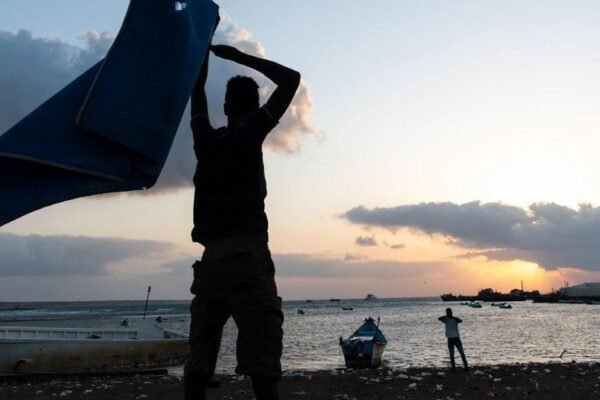
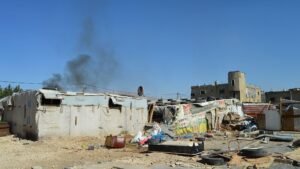
Earlier that day in Jurahiya, four boys could be seen repairing torn tarps outside shelters patched together from scrap metal and concrete fragments, while their father worked behind them repairing the rear wall of the shelter, a reminder of how temporary infrastructure has hardened into long-term displacement.
Across Lebanon, Jordan, and Türkiye, a consistent pattern has emerged: policies are not designed to fully integrate refugees, but to manage their presence under constraint.
These approaches take different forms, including restrictions on labor access, limited pathways to formal integration, and increasing political pressure toward return. In Lebanon, where economic collapse has intensified competition over jobs and services, these dynamics are especially pronounced.
What emerges is a system that sustains displacement over time. Governments are balancing competing pressures: international expectations to uphold humanitarian commitments and domestic demands to preserve economic and political stability. With limited fiscal capacity, long-term integration remains politically and economically difficult to sustain.
The result is a form of managed displacement, one that keeps refugees in a state of semi-permanence without offering durable solutions.
In this framework, refugee return becomes a tool for states to relieve domestic pressure, offering ways to reduce economic strain and political tension even when the conditions necessary for sustainable return do not exist.
These systems are not designed to resolve displacement. They are structured to contain it.
The Limits of Return as Policy
The growing emphasis on return as an endpoint overlooks a fundamental reality: the conditions required for sustainable return do not yet exist at scale.
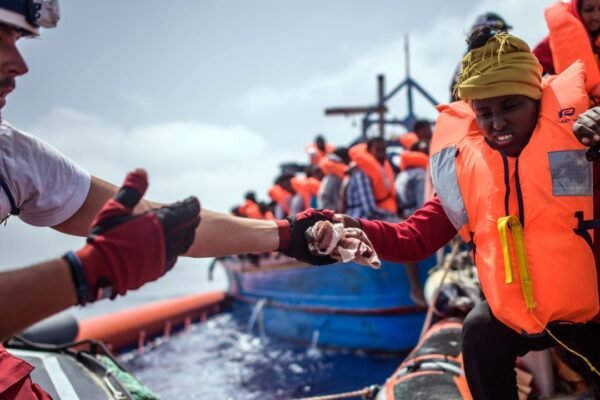
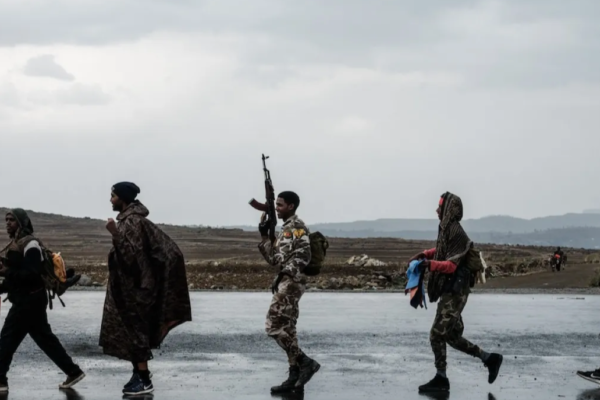
This dynamic is unfolding even as return accelerates. Following the fall of the Bashar al-Assad regime in December 2024, large-scale movement back to Syria has accelerated. By late 2025, hundreds of thousands of refugees had returned from neighbouring countries, alongside well over a million internally displaced Syrians returning within the country.
At first glance, these numbers suggest momentum: that conditions may be improving enough to support return at scale. But scale does not equal sustainability. The presence of return does not resolve the conditions that shape whether it is viable.
Many of these movements are occurring under pressure, uncertainty, or necessity rather than as the outcome of structured, policy-driven pathways. In this sense, rising return figures do not contradict the limitations of current policy frameworks. They expose them.
Even in the context of increased returns, financial incentives cannot compensate for destroyed housing, weak infrastructure, and limited economic opportunity. They cannot replace functioning hospitals, reliable water systems, or stable labour markets.
As Faraj put it, “It’s safer here. There are jobs. In Syria, nothing is available – not hospitals, not stores.”
His comparison reflects more than a preference for stability. It is a direct assessment of what daily life requires to function. Safety alone is insufficient if basic systems are absent.
While return is often framed in political terms such as progress, stabilisation, or resolution, refugees are evaluating something far more immediate: whether life is materially sustainable.
For policymakers, refugee return is treated as a signal that conditions are improving.
On the ground, it is experienced differently.
For many, return represents a continuation of uncertainty under new conditions. It is a recalculation, one in which refugees weigh incomplete information, limited options, and immense risk of moving their families between imperfect alternatives.
Policy Implications: Bridging the Disconnect
Three policy implications follow.
First, host country fatigue will continue to intensify, particularly in economically fragile contexts such as Lebanon. As displacement becomes more deeply embedded in domestic political and economic systems, pressure for return will increase, regardless of conditions within Syria.
Second, current return policies risk ineffectiveness at both the informational and credibility levels. Many refugees remain unaware of formal programs, while others do not view them as realistic options. Even where incentives exist, they fail for a simpler reason: they are built on the wrong assumption.
Third, displacement is becoming structurally prolonged, especially among younger populations who have spent formative years in host countries. Return is no longer simply a logistical challenge, but a generational transition shaped by education, social ties, language adaptation, and evolving expectations for the future. Many younger Syrians in Lebanon have now spent over a decade outside Syria, with some having little direct memory of the country beyond family narratives and fragmented visits. Over time, this creates a widening gap between political assumptions about return and the social realities shaping refugee identity. Even if material conditions improve incrementally, large-scale return may become less likely as displacement hardens into long-term social permanence.
These dynamics do not suggest that movement has stopped. In some cases, refugees have left host countries such as Türkiye, seeking futures elsewhere or responding to shifting legal and economic pressures. However, these movements do not validate the success of the return policy. Rather, they reflect the same underlying pattern: refugees are making strategic decisions under constraint, comparing uncertain options in pursuit of stability.
Addressing the information gap is a necessary first step.
In the Beqaa Valley, multiple interviewees had no awareness of UN-supported return programs, while others encountered them only through informal channels. Improving communication requires moving beyond top-down dissemination toward localised, trusted networks that refugees already rely on.
Community-based institutions such as schools, NGOs, and local educators are particularly well positioned to play this role. Organisations like Jusoor, already embedded within refugee communities, could serve as direct points of outreach, providing clear and consistent information about eligibility, risks, and conditions.
However, communication alone is not sufficient.
Policy must also align closely with ground-level realities. This means acknowledging that refugee return is not primarily constrained by cost, but by infrastructure, services, and economic viability. Without progress on those fronts, cash incentives will continue to operate at the margins of decision-making.
These dynamics suggest that return should not be treated as a near-term solution. Instead, policy frameworks should prioritise credibility, communication, and the stabilisation of both host and origin states.
The Distance Between Policy and Reality
In the Beqaa Valley, return is not a formal program. It is a question answered under pressure. One that refugees are answering on their own terms, with limited information, constrained options, and mounting pressure from countries that once welcomed them.
For policymakers, the challenge is not simply encouraging return, but understanding the conditions under which return becomes possible. As long as refugee return is framed primarily as a financial or logistical problem, policy will remain disconnected from the realities shaping refugee decision-making.
“Stability,” as Walid (name changed) put it, “is not the same as peace.”
That distinction shapes how return is evaluated. When asked what he feels when he thinks about Syria now, Raith does not hesitate.
“I miss it a lot,” he says. “But it’s not safe.” Then, after a pause:
“Syria takes two steps forward, one step behind.”
When asked what he wishes the world understood, he answers plainly:
“I just want people to see how we live. To know we still exist.”
His hope is just as simple:
“I want to see Syria built and safe again.”
Between memory, caution, and hope, lies a gap that policy has yet to close.
Until that gap narrows, return will be shaped less by formal policy frameworks than by a far simpler question: whether conditions on the ground can sustain everyday life.
The MEA Institute for Strategic Studies does not take institutional positions on public policy issues; the views expressed in this publication are those of the author(s) and do not necessarily reflect the views of the Institute, its staff, or its board.