


Abstract
The Iran War has exposed the structural fragility of the Gulf’s post-Cold War security order. For decades, GCC states operated under an implicit bargain with the United States: strategic access and energy reliability in exchange for extended deterrence. This report argues that the bargain is no longer sufficient. Sustained Iranian strikes on critical infrastructure across Saudi Arabia, Qatar, the UAE, Oman, Kuwait, and Bahrain — including energy facilities, desalination plants, ports, and aviation hubs — have demonstrated that external protection can mitigate risk but cannot eliminate vulnerability. Washington’s conduct throughout the conflict, marked by unilateral military action, limited consultation with Gulf partners, and the consistent prioritisation of Israeli strategic interests, has deepened long-standing doubts about the reliability and alignment of American security guarantees.
Drawing on the evolving dynamics of the conflict, the report maps three strategic postures available to Gulf states: defensive restraint backed by diplomatic counterpressure, a forward defensive posture oriented toward active threat denial, and coercive escalation short of full war. It then examines the structural obstacles — regional mistrust, divergent threat perceptions, limited domestic defence capacity, and U.S. resistance to Gulf procurement diversification — that constrain any significant reconfiguration of the region’s security architecture. The report concludes that the most plausible post-war trajectory is a hybrid model: continued, if recalibrated, reliance on the United States alongside accelerated diversification of defence partnerships and gradual deepening of intra-GCC functional cooperation in air defence, maritime security, and intelligence sharing. The Gulf is unlikely to build a NATO-style alliance, but it can no longer afford to outsource its security to a single patron. The defining question of the post-war order is not whether the Gulf security model must change, but how deliberately and coherently the region will shape what comes next.
Introduction
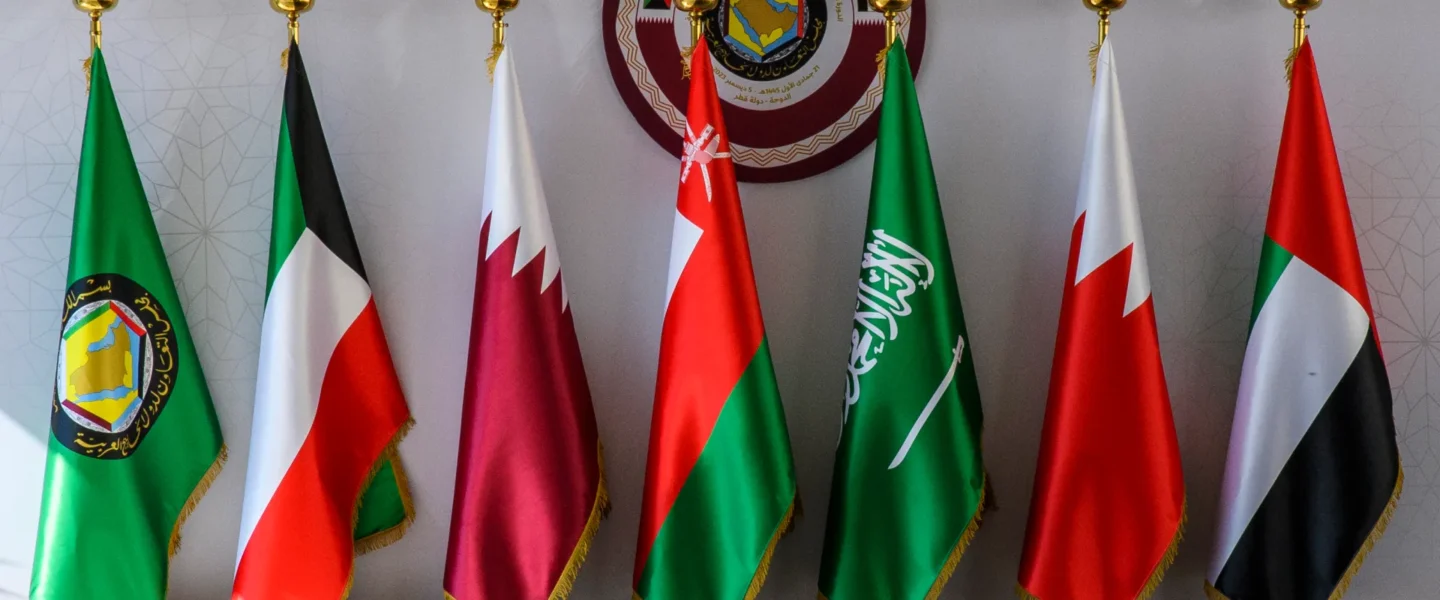
On the 25th of May 1981, the leaders of Oman, the United Arab Emirates (UAE), Saudi Arabia, Bahrain, Qatar, and Kuwait convened in Abu Dhabi to declare the formation of the Cooperation Council for the Arab States of the Gulf. Founded on the collective conviction of achieving “coordination, cooperation and integration” among its members, the six-member Gulf Cooperation Council (GCC), as it came to be known, emerged primarily in response to an ever-evolving security landscape that threatened the very socio-political fabric of its member states.
Prior to its proclamation and as early as 1975, the member states of what would eventually form the GCC, in addition to Iran and Iraq, had come together to discuss a Saudi proposal for a collective security arrangement in the Gulf. This was swiftly followed by another meeting the following year in Muscat, where the eight countries realised that, owing to irreconcilable differences, competing visions in who would lead this arrangement, as well as a lack of consensus on broader economic and foreign policy concerns, a wider Gulf security pact that included all eight states was not achievable. The proposal stalled, and the idea of a region-wide framework lay dormant until the new decade.
The Iranian Revolution and the subsequent breakout of the Iran-Iraq War altered this calculus. What followed was a flurry of diplomatic activity between the founding six countries to overcome what differences they could and sidestep what differences could not be addressed in the immediate, as they attempted to confront a new regional order which saw an ideologically driven, expansionist Iran threatening their doorstep. As a result, the 1980s saw successive initiatives within the GCC beginning with the signing of the Charter in 1981, the signing of a unified economic agreement that same year, and in 1984, the establishment of the Unified Military Command, formerly the Peninsula Shield Force, the GCC’s defence arm.
Yet for all the institutional scaffolding, the GCC’s actual defence against Iran relied less on these nascent structures than on the war being fought on its behalf next door. A revolutionary Tehran, intent on exporting its revolution, helped spark anti-Ba’ath riots in Iraq. For the Gulf states, Baghdad was not just a cautionary tale — instead, it served as the first line of defence against Iranian expansionism reaching their own borders.
The six states threw their financial, economic, and military weight behind Baghdad following its invasion of Iran, bankrolling a subsequent decade-long war that claimed nearly a million lives and ended in a stalemate that satisfied no one. But the buffer they had paid for proved illusory.
Iraq’s invasion of Kuwait in 1990 demonstrated that the threat to Gulf security could come from the very state they had armed to protect them. What eventually led to the First Gulf War proved to the GCC that inter-bloc coordination was not enough; they needed an external security guarantor with the capacity and the willingness to project decisive force. The United States, which led the coalition that liberated Kuwait, filled that role, and the implicit bargain that would define Gulf security for the next three decades was cemented: strategic access and energy stability in exchange for American extended deterrence.
In the decades that followed, the Gulf’s reliance on the United States seldom wavered. Not every GCC state has pursued Washington’s protection with equal depth or conviction — the bloc was never as uniform as it appeared. Bahrain hosted the U.S. Fifth Fleet, Qatar became home to the United States Central Command’s (CENTCOM) forward headquarters at Al Udeid, Saudi Arabia provided access to air bases, and the UAE deepened intelligence and defence cooperation, to name but a few strands of a web of bilateral arrangements that, taken together, made the American military presence in the Gulf both pervasive and deeply embedded. Yet for all their individual contours, these relationships shared a common logic: Gulf security had been outsourced to Washington.
The cracks in this arrangement did not take long to appear. What the Gulf discovered was that in a transactional framework, the partner willing to pay the most sets the terms. And Israel, with its entrenched lobbying apparatus in Washington, consistently commanded more of Trump’s attention and latitude than the Gulf ever could.
Despite making Riyadh the destination of his first overseas visit — a gesture the Gulf interpreted as a signal of strategic prioritisation — Trump’s most consequential policy decisions in the region consistently served Israeli interests first: recognising Jerusalem as Israel’s capital and relocating the U.S. embassy, recognising Israeli sovereignty over the Golan Heights, declaring settlements consistent with international law, shuttering the PLO office in Washington, and defunding UNRWA.
The Abraham Accords were initially celebrated as a breakthrough — a stepping stone toward broader normalisation between Israel and the Arab world, with Saudi Arabia itself reportedly edging toward signing on. In the end, however, they served only to legitimise Israel’s strategic gains without extracting any meaningful concessions on Palestine. What was presented as the foundations of a future regional peace architecture looked increasingly like a vehicle for Israeli priorities, underwritten by Washington and paid for in Gulf diplomatic capital. The Gulf had bet on a transactional president, only to find that the transaction favoured a different client.
In 2026, over a year into the second Trump administration, the Gulf’s strategic conundrum has yet to be resolved. Again, in the midst of a flurry of diplomatic activity to prevent another paradigm shift in the regional security order, Oman’s Sayyid Badr Al Busaidi mediated between Iran and the U.S. to no avail. Whatever space Muscat had painstakingly carved out for diplomacy was obliterated on the 28th of February with the launch of the U.S.’s Operation Epic Fury and Israel’s Rising Lion. Iran’s retaliatory response, targeting not only Israel but the Gulf states, has fundamentally altered the region’s threat calculus. Despite its strikes on American military installations across the region, Tehran’s readiness to attack both Gulf military and civilian infrastructure in equal measure has made clear that this is not merely a war between Iran and the United States being fought on Gulf soil; it is a war in which the Gulf itself has become a target.
Whatever post-war order emerges, the region will have to contend with a neighbour that has demonstrated both the capability and the willingness to degrade their defences and strike their sovereign territory and economic lifelines. It is this reality, as much as the failures of American extended deterrence, that will shape how the Gulf organises its security in the years ahead. In the short term, the GCC states have little choice but to continue to look to the U.S., but in the long term, it is clear that the war has made this arrangement unsustainable.
A Pattern of Escalating Vulnerability
The Gulf’s present exposure is the culmination of a decade-long pattern in which the region’s critical infrastructure and economic centres have become increasingly vulnerable to escalation. The 2019 strikes on Saudi Aramco’s Abqaiq and Khurais facilities, claimed by the Houthis and eventually attributed to Iran following a UN investigation, were a clear early warning. Perceived as punishing Saudi Arabia for siding with the U.S.’s “maximum pressure” policy against Tehran, the attack knocked out roughly half of Saudi oil output and demonstrated that critical Gulf energy infrastructure could be hit with precision. Equally as worrying to the Gulf monarchies, Washington’s immediate response was at best muted, demonstrating to the largely U.S.-aligned Gulf region that American extended deterrence did not automatically translate into direct protection when politically costly escalation was at stake.
That lesson deepened in September 2025, when Israel struck Doha in the first direct Israeli attack on GCC soil, with the stated aim of assassinating Hamas leadership. The attack killed six people, including a Qatari security officer, and was widely seen in the region as a major breach of Gulf sovereignty. In response, the GCC issued a joint statement condemning the attack. While U.S. officials stated that Washington had not coordinated or approved the operation, conflicting reports about whether advance warning had been given in time for Washington to intervene fed regional suspicion. More broadly, the episode underscored a troubling reality for Gulf states: even other close U.S. partners could carry out high-risk military actions on their territory, with the United States either unwilling or unable to prevent them.
Iran’s June 2025 missile strikes on the Al-Udeid airbase in Qatar revealed a different dimension of vulnerability. Tehran targeted American military infrastructure in retaliation for the American Operation Midnight Hammer, which severely damaged three Iranian nuclear sites: Natanz, Fordow, and Isfahan. While the full extent of the damage to these sites cannot be determined conclusively, it is clear that the damage to Iran’s centrifuges in all three sites has left the country with no viable path to creating weapons-grade uranium in its centrifuge plants. By all accounts, Iran provided advance notice through diplomatic channels to both U.S. and Qatari authorities, allowing American military service members to evacuate and Qatar to intercept incoming missiles, avoiding any casualties. The strike illustrated a stark reality and offered a clear foreshadowing for the Gulf’s current predicament: even if Gulf states seek neutrality, hosting U.S. military assets can draw them directly into conflicts they are trying to avoid.
The current war has taken that logic further by expanding from bases and symbolic targets to the infrastructure Gulf states rely on to maintain economic continuity. Iran has targeted energy and logistics nodes across the region, including the Ras Laffan gas facility in Qatar, Fujairah and Habshan in the UAE, Salalah, Sohar, and Duqm in Oman, and facilities in Saudi Arabia, Kuwait, and Bahrain.
What makes this phase qualitatively different is that some of these sites lie outside the Strait of Hormuz and were specifically developed to bypass it. Facilities such as Fujairah and associated pipeline networks were built as contingency infrastructure to sustain exports in the event of a Hormuz disruption. By targeting these facilities, Iran is not only threatening one of the Gulf’s primary economic sectors, but also signalling that the alternative routes developed to mitigate risk can also be targeted. In effect, the region is no longer confronting a single point of vulnerability, but a broader system in which both primary and backup infrastructure are exposed.
The targeting of desalination plants and power infrastructure would be even more dangerous and has been described as Iran’s “nuclear option” in the Gulf. A shift to these targets would move the conflict from economic coercion into direct societal breakdown. GCC countries depend overwhelmingly on desalinated water, with the six constituent states producing 40% of the world’s desalinated water. While Saudi Arabia derives 18% of its water from desalination, other states such as Bahrain and Qatar depend on it for more than half of their water at 59% and 61%, respectively. The next most common source of water for all GCC states is groundwater, which is largely finite, similar to fossil fuels, making desalination systems existential rather than merely strategic vulnerabilities.
Iranian officials have stated that they would attack regional energy and water desalination infrastructure in response to a U.S. or Israeli attack on its own energy facilities. Perhaps recognising the existential nature of such an escalation, or attempting to manipulate energy markets, President Donald Trump announced a postponement of attacks on Iranian power plants. Following even more escalatory American rhetoric and Iranian threats to the wider region in response, the two sides agreed to a two-week ceasefire on the 8th of April.
If water and electricity networks enter the escalation ladder, Gulf governments would no longer be managing export losses or insurance costs, but immediate risks to public health and social cohesion. At that point, the Gulf would cease to be a theatre absorbing the consequences of war and become one compelled to respond to it.
The Collapse of the Old Security Model
Recent events exposing Gulf vulnerability have forced a fundamental question to the surface: Can a security model built primarily on U.S. military architecture and interests still hold? Security for many states has rested on an implicit bargain, whereby Washington would provide extended deterrence, while Gulf states would host U.S. forces and align with Washington’s regional posture. To bolster this model, Gulf countries have invested and committed trillions of dollars in American weaponry, defence systems and the wider American economy. The UAE committed 1.4 trillion USD over a ten-year period in AI infrastructure, semiconductors and other sectors. Many states have also aligned themselves politically with American initiatives in the region, with the most controversial being the Abraham Accords, through which Bahrain and the UAE have normalised relations with Israel. This model has rested not only on American military superiority, but on the assumption that Gulf security would remain a consistent priority when it mattered most. It is this assumption that is now under strain.
One indication lies in the reallocation of U.S. defensive resources across theatres. In early March 2026, the United States began transferring Patriot and Terminal High Altitude Area Defence (THAAD) air defence systems from South Korea to the Middle East, highlighting the limits of U.S. force posture under competing operational demands and reprioritisation. South Korean President Lee Jae Myung expressed his opposition to the move and inability to prevent it, despite the US–South Korea mutual defence treaty, and Washington’s broader pivot to Asia. This move came amid reports that some Gulf states’ requests to Washington to replenish missile interceptors went unanswered early in the war, either due to American unwillingness or inability to do so. These developments have begun to reinforce perceptions that American protection is conditional and may be subject to reprioritisation without consultation.
The lack of consultation with Gulf partners has indeed been a major sticking point from the beginning of the war. The experience of recent escalations has exposed a structural imbalance whereby Gulf states host the infrastructure that enables U.S. military operations, yet exercise limited influence over how those operations are conducted or how escalation is managed. In this context, security dependence can become a source of vulnerability rather than protection. States that sought to avoid open conflict with Iran, knowing the retaliation that it would cause, have nonetheless found themselves exposed due to their position within a broader security architecture over which they have limited control. These concerns are not entirely new. Decades of reliance on American protection have left the Gulf highly exposed to shifts in U.S. policy. What is different today is the growing perception that these guarantees may not only be uncertain, but at times misaligned with Gulf interests. In practice, Gulf states are neither fully neutral nor fully co-belligerent, but rather they are structurally embedded in conflict dynamics while lacking meaningful agency over strategic decision-making.
Reports of shifting U.S. objectives and unilateral action during active diplomatic engagement have more deeply entrenched concerns about policy consistency and reliability. Oman’s Foreign Minister indicated that Iran had signalled willingness to stop stockpiling enriched uranium during ongoing talks prior to Israeli and U.S. military action in February 2026, marking the second time the U.S. attacked Iran in the middle of negotiations within a year. More broadly, similar concerns have emerged among European allies, where analysts have pointed to increasing volatility and unilateralism in U.S. decision-making.
At a more fundamental level, the crisis has underscored an important consideration for Gulf states: Iran is a permanent geographic reality, but U.S. attention to the region may prove far less enduring. In a March 2026 press conference, nearly a month into the war, the Qatari Foreign Ministry Spokesperson Majed Al-Ansari stated:
“Iran has been here for millennia…total annihilation is not an option…We will be neighbours for the future of humankind…The most significant outcome of this war is the shattering of the concept of a regional security system in the Gulf. This system was based on certain assumptions, many of which have been overturned in the current conflict…[we] need to reassess in the aftermath of this war the meaning of a shared regional security system.”
American strategic priorities can and will shift across regions, but Gulf states will continue to bear the long-term consequences of instability in their immediate neighbourhood. This does not mean that the U.S. role is disappearing, but it does suggest that the existing model — based on assumed primacy, reliability, and alignment of interests — is no longer tenable in its current form.
The Strategic Dilemma: From Restraint to Coercion
Despite seeking to avoid direct involvement, Gulf governments have pursued intensive diplomatic engagement aimed at preventing further escalation while maintaining their formal non-belligerent status. Across the GCC, official statements emphasised that their territories would not be used as platforms for offensive operations against Iran and called for restraint from all parties. At the same time, repeated strikes targeting civilian and economic infrastructure, identified for allegedly housing U.S. interests such as military bases, have generated mounting pressure to demonstrate resolve and ensure the credibility of regional defence arrangements.
However, this diplomatic posture has not been uniform. A distinction emerged between states maintaining clearer neutrality and those adopting more conditional, security-driven positions. Oman and Qatar have consistently emphasised mediation and de-escalation, framing the conflict as external to their strategic priorities and prioritising diplomatic engagement. By contrast, Saudi Arabia and the UAE have adopted more assertive rhetoric, particularly in response to sustained attacks on infrastructure and threats on maritime routes. Collective responses within the GCC have nonetheless underscored solidarity and the principle that an attack on one member constitutes a threat to all, while stopping short of committing to offensive action. Parallel diplomatic efforts with external partners, including coordination with the European Union on maritime security and supply-chain protection, reflect concern that the conflict could destabilise critical trade routes and energy markets. International reactions, including a United Nations Security Council resolution condemning attacks on Gulf states and neighbouring countries, further highlight the broader implications for regional stability and freedom of navigation.
These developments demonstrate the core dilemma facing the Gulf states: how to preserve security, economic continuity, and political autonomy while avoiding steps that could transform them from exposed targets into active belligerents. The two-week truce declared between Washington and Tehran has offered a fragile reprieve, but missiles landing on Gulf soil hours after its announcement underscore how little protection even a declared pause in hostilities affords a region absent from the negotiating table. Whether the Islamabad talks produce a settlement that accounts for Gulf interests, or whether the region will once again find its security determined by actors with different priorities, remains the open question.
Defensive Restraint Backed by Diplomatic Counterpressure
The posture most Gulf states have adopted to date is one of defensive restraint: absorbing attacks while actively defending their territory, maintaining diplomacy, and signalling that they are not parties to the U.S.–Iran war. Rather than joining offensive operations against Iran, governments across the GCC have focused on intercepting missiles and drones, protecting critical infrastructure, and maintaining communication channels in order to avoid being drawn fully into the conflict. This approach reflects a deliberate effort to leave space for the possibility of post-conflict stabilisation. Regional measures to limit escalation have included restrictions on the use of airspace and operational access, reflecting efforts to prevent the conflict from expanding geographically.
This restraint should not be mistaken for passivity. Gulf air-defence systems have been operating continuously since late February 2026, intercepting mainly Iranian projectiles targeting cities, ports, energy facilities, airports, and U.S.-military associated sites. The UAE alone has faced hundreds of ballistic missiles and thousands of drone attacks, with debris causing damage in civilian areas and casualties among civilians. Similar patterns have been observed across the region, with Saudi Arabia, Qatar, Kuwait, Bahrain, and Oman all reporting repeated interceptions and infrastructure damage. The UAE has been among the most exposed, with official figures indicating interception rates of more than 90%, including approximately 94% of drones and 92% of ballistic missiles during the early phase of the conflict. As of the 29th of March, UAE air defences had engaged 414 ballistic missiles, 15 cruise missiles, and 1,914 UAVs.
Importantly, missile interception in this posture is strictly defensive, aimed at protecting population centres, energy assets, aviation hubs, and desalination facilities, and does not entail striking Iranian territory or launch platforms.
This restrained approach is rooted in long-term strategic hedging. In recent years, Gulf governments have sought to balance security partnerships with the United States against diplomatic engagement with Tehran. The current crisis has not erased these incentives. Even as missile interceptions illuminate Gulf skies, GCC leaders have continued to emphasise dialogue as the preferred pathway to restoring regional stability. At the same time, the UAE’s increasingly assertive public messaging on maritime security and deterrence suggests a gradual shift from a purely defensive posture towards a more forceful stance, even as it continues to avoid formal entry into the conflict.
Diplomatic counterpressure has accompanied this restraint. GCC states have pursued coordinated condemnation through international forums, including the UN Security Council resolution demanding that Iran cease attacks on Gulf countries. Qatar’s representative warned that failure to respond would signal that attacks on uninvolved neighbours carry no consequences, highlighting the Gulf’s reliance on international legitimacy rather than unilateral escalation.
However, the strategy carries significant risks. Sustained attacks on civilian infrastructure and energy facilities strain interceptor stockpiles, disrupt economic activity, and may erode public confidence in governments’ ability to ensure security. Repeated strikes on oil installations, including attacks that forced temporary shutdowns or rerouting of exports, highlight the vulnerability of the Gulf’s economic model to prolonged disruption. Moreover, restraint can be interpreted by adversaries as weakness, potentially encouraging continued targeting of high-value assets.
For now, defensive restraint reflects a pragmatic calculation: escalation could transform the Gulf from collateral damage into a primary battlefield, whereas restraint preserves diplomatic space and reduces the likelihood of catastrophic regional spillover. It also signals continued preference for crisis management through international engagement, rather than military confrontation, even as GCC states reserve the right to respond collectively under international law.
Forward Defensive Posture
A forward defensive posture represents a calibrated shift from passive protection towards active denial of threats within and immediately around the defended battlespace, without formally entering the war alongside the United States and Israel. Under this approach, Gulf states would continue to avoid offensive participation in coalition operations while expanding their ability to detect, intercept, and neutralise threats before impact. This includes extended-range missile and drone interception, reinforcement of critical infrastructure, and enhanced maritime security operations.
Rather than projecting force deep into adversary territory, forward defence in this context would prioritise interception at range, early warning, and disruption of incoming threats as close as possible to their point of entry, consistent with a strategy of deterrence by denial. While limited, immediate countermeasures against imminent threats may be justified under Article 51 of the UN Charter, sustained strikes against launch platforms beyond the immediate battlespace would risk blurring the line between defensive posture and active participation in the conflict, as well as risk inviting further Iranian retaliation.
Recent developments have increased pressure for such a shift. Sustained Iranian missile and drone attacks have targeted facilities, refineries, ports, and aviation infrastructure across the region, causing production disruptions and exposing the economic fragility of highly centralised infrastructure systems. Strikes on key facilities, including oil processing infrastructure, have in some cases forced temporary shutdowns and rerouting of exports, underscoring the fragility of the region’s energy-dependent model under sustained attack.
At the same time, the United States’ ultimatum demanding the reopening of the Straits of Hormuz, accompanied by threats of strikes against Iranian energy infrastructure, heightened fears that Gulf states could be drawn into a wider confrontation regardless of their intentions. Washington has signalled a willingness to use force to restore maritime flows, while Tehran has warned that any attacks on its infrastructure would be met with retaliation against energy and water systems across the Gulf, including desalination facilities essential to civilian survival.
Crucially, the situation does not amount to a complete closure of the Strait. Rather, transit has become selective and conditional: Iran has indicated that passage may be permitted for vessels deemed “non-hostile” or operating under coordination arrangements, while restricting or denying access to ships linked to adversarial states. At the same time, commercial traffic has been sharply reduced due to security risks, insurance constraints, and the threat of attack, meaning that while the legal regime of transit passage formally persists, it is constrained in practice.
Forward defence aims to raise the operational costs of continued attacks while preserving strategic autonomy. Measures associated with this posture include expanded missile and UAV interception beyond terminal defence, increased intelligence, surveillance and reconnaissance capabilities, integrated early-warning systems, hardened energy installations, convoy protection for commercial shipping, and strengthened naval patrols in vulnerable maritime corridors. Unlike the defensive restraint posture, which focuses on absorbing and neutralising incoming strikes, forward defence seeks to reduce the adversary’s ability to launch them in the first place.
However, this approach carries substantial escalation risks. Even narrowly targeted actions against launch sites or maritime threats could be interpreted by Tehran as participation in the broader U.S.-Israeli campaign, undermining the Gulf states’ efforts to maintain political separation from offensive operations. Iranian retaliation would likely prioritise precisely those assets most difficult to restore and most damaging to lose — export terminals, desalination plants, electricity grids, ports, and civilian aviation infrastructure. Given the concentration of population and economic activity along vulnerable coastlines, even limited disruptions could produce outsized humanitarian and economic consequences.
Forward defence also exposes structural dependencies. Effective extended interception and preemptive defence require integrated command-and-control systems, real-time intelligence sharing, and advanced air- and missile-defence architecture that remain unevenly distributed across the Gulf and often rely on U.S. operational support. As interceptor stockpiles decline and operational tempo increases, sustaining such a posture risks deeper military entanglement with Washington at precisely the moment when Gulf leaders seek greater strategic autonomy.
Despite these risks, forward defence may become the most viable option if sustained attacks render pure restraint untenable. By demonstrating capability and willingness to act within defensive limits, it aims to restore deterrence without crossing the threshold into full war participation. In strategic terms, it represents an attempt to stabilise the security environment through controlled escalation, raising costs for the attacker while preserving diplomatic space for de-escalation should negotiations resume.
Coercive Escalation Short of Full War
At the far end of the strategic spectrum lies a posture of coercive escalation: actively imposing costs on Iran rather than merely defending attacks, while still avoiding formal entry into full-scale war. This approach would seek to alter Tehran’s calculus by demonstrating that continued strikes on Gulf territory will trigger tangible consequences beyond interception and defence. Crucially, many such measures can be undertaken without a formal declaration of war, allowing governments to maintain legal ambiguity and domestic political distance from the conflict.
The plausibility of this posture has increased as the war has evolved into a regional contest centred on energy infrastructure and maritime security. Iranian strikes on oil facilities, ports, and transport hubs across the Gulf have underscored the vulnerability of economies heavily dependent on uninterrupted exports and shipping flows. Tehran has also warned that any country facilitating attacks against it will be considered a legitimate target, explicitly linking Gulf basing decisions to future retaliation.
Several reports suggested that Saudi Arabia and the UAE were inching closer to deeper operational support for U.S. efforts. Riyadh reportedly granted American forces access to facilities, including strategic airbases previously restricted for offensive operations, while Abu Dhabi had taken measures against Iranian assets and signalled readiness to coordinate more closely with Washington on ensuring safe passage in the Strait of Hormuz. Such steps fall short of direct participation but materially enhance coalition capabilities by expanding basing options, logistics, and operational reach.
Importantly, Gulf responses are not uniform. While Saudi Arabia and the UAE appear to be moving toward indirect support roles, other states like Qatar and Oman have maintained more cautious positions, emphasising de-escalation and mediation. This divergence reflects differing threat perceptions, strategic cultures, and economic calculations across the GCC.
Forms of coercive escalation available to Gulf states can be grouped into three categories. Indirect offensive supportreflects the current operational reality — Gulf states already enable U.S. military operations through basing access, intelligence sharing, and logistical support while formally remaining outside direct hostilities. Limited direct strikesrepresent a more visible escalation but remain narrowly defensive in intent — precision attacks against missile launchers, drone facilities, or maritime threats posing imminent danger could be conducted from stand-off range using air power or unmanned systems. Economic and maritime pressure would focus on securing energy flows and maintaining shipping routes under heightened threat conditions, including armed convoy operations, expanded naval patrols, and interdiction of hostile maritime activity.
Despite these options, Gulf states remain deeply cautious. Iran retains substantial asymmetric capabilities, including drone saturation attacks, cyber operations, and the ability to target critical civilian infrastructure such as desalination plants and power grids. Attacks on water infrastructure could produce severe humanitarian consequences in arid societies dependent on desalination. The potential for simultaneous disruption of both the Strait of Hormuz and the Bab el Mandeb further heightens fears of a catastrophic shock to global trade.
Political constraints reinforce this caution. Achieving a unified GCC decision for overt escalation is difficult given divergent national interests, the distinct nature of each member state’s relationship with Tehran, and thereby differing threat perceptions. Even states adopting tougher rhetoric have emphasised that direct involvement would transform their territory into primary targets.
Ultimately, the cautious Gulf response reflects a pragmatic judgement that coercive escalation may generate consequences more dangerous than continued restraint. Preparations, therefore focus on resilience: strengthening integrated air and missile defence, expanding counter-drone and anti-ship capabilities, enhancing maritime domain awareness, and reinforcing economic systems against prolonged disruption. Even this outer-edge posture remains less a preferred course of action than a contingency should all other strategies fail.
The Structural Obstacles to a Gulf Security Architecture
Multiple factors inhibit a significant deepening of defence cooperation amongst the GCC countries. There are also factors that will ensure the GCC’s reliance on the U.S. for years or decades to come. These factors can be broadly divided into regional, international, and structural.
One regional factor hindering closer cooperation is the variation in threat levels and perceptions. One prime example is Qatar, which was on the receiving end of a three-and-a-half-year blockade imposed by Saudi Arabia, the UAE, Bahrain, and their regional allies to force drastic changes in Qatari policy. It is unlikely that Doha wishes to increase its security reliance on countries that, until recently, posed a significant threat to its sovereignty. This becomes especially relevant given the recent history of Saudi Arabia and the UAE demonstrating a willingness to deploy military force in pursuit of political objectives, as seen in Yemen, Sudan, and Libya. Yet for all the justified wariness, the current war has demonstrated that political mistrust need not preclude functional cooperation where threats converge.
Governments of other GCC countries, especially Bahrain and Kuwait, might also prefer allies that are more powerful than what the GCC can offer in the foreseeable future given their national characteristics and history. Bahrain, with its Sunni monarchy ruling over a Shia-majority population, has long viewed Iranian subversion as an existential threat — one that demands the kind of security guarantee only the United States can currently provide. The memory of Iraq’s 1990 invasion and the U.S. role in liberating Kuwait may make it more hesitant than its neighbours to end a relationship that once restored the country’s sovereignty, even if maintaining it now comes at a high cost.
Another problem is structural in nature. Developing modern, advanced weaponry takes decades. Even countries with mature military-industrial complexes require decades to bring advanced air defence and weapons systems from conception to operational capability. The Gulf states, with limited yet growing domestic defence industries, cannot realistically close that gap in the near term, making some form of external dependence unavoidable for the foreseeable future. It should also be noted, however, that the still-nascent drone industry might provide an opening for newcomers.
The Gulf states have nonetheless shown an interest in working with countries other than the U.S. in the defence sector. Saudi Arabia’s increasing cooperation with Pakistan, in the context of its current mutual defence agreement, and the UAE’s expanding military relationship with India illustrate this direction. Potential partners in the realm of air defences are few and far between, especially if one wants to buy planes and air defences from the same country to reduce interoperability concerns. The challenge, therefore, is to find new vendors that can sell not only individual pieces of weaponry but entire integrated systems. Another key factor is that GCC countries need to believe that relations with their new partners will remain friendly for decades to come — otherwise, access to ammunition or spare parts may become compromised.
The already difficult task of diversifying security partners is further impeded by the U.S.’s history of undermining such efforts. Washington has penalised partners that seek to diversify their weapons procurement beyond American suppliers — sanctioning Turkey over its acquisition of the Russian S-400 air defence system, refusing to sell F-35 fighter planes to the UAE due to its economic ties and alleged defence cooperation with China, and leveraging similar threats against Egypt and Indonesia. Should GCC countries actually move away from the U.S., such punishments may not be militarily significant once the transition is complete. However, the countries would be quite vulnerable during the transition period itself.
It is also not clear how more distant relations between GCC countries and the U.S. would impact Israel’s policy towards the peninsula. Israel’s 2025 bombing of Doha led to assurances from Washington that Israel would refrain from such attacks in the future. A deterioration of GCC–U.S. relations could remove whatever restraining influence proximity to Washington currently affords the Gulf over Israeli behaviour, potentially emboldening Israel to act with even less regard for Gulf sovereignty than it has already demonstrated.
Moreover, there are also significant divergences between the two arguably most influential GCC member states — Saudi Arabia and the UAE. Until a few years ago, the two countries had close and amicable relations. However, in the past few years, a rift has emerged that stems from economic and political competition as well as the personal estrangement between the countries’ leaders. While open hostilities currently remain dormant as the Iran War continues, tensions in the relationship are far from over.
Ultimately, reorienting the GCC’s defence policies is a difficult task as countries face varying threat levels, differing timelines for developing their own advanced weapon systems, and limited options for defence partners. Joint action by the GCC countries is further inhibited by differing perceptions of what constitutes acceptable foreign policy behaviour and outright antagonism between some of the bloc’s most influential countries.
Gulf Security Architecture in the Aftermath of the Iran War
Despite the incoming drone and missile attacks, the Gulf will have to actively reconcile with a failed security order that had seemed to promise to both deter and defend. The question is not whether the Gulf should reorganise its security posture, but how — and in doing so, it will require a careful recalibration of existing systems, partnerships, and threat assessments. The U.S. military presence, for all its shortcomings during this war, still provides capabilities that no combination of regional or international partners can replicate in the near term. The challenge is to consolidate what works, supplement what is insufficient, and create what is missing.
In this context, two broad lines of effort present themselves, neither mutually exclusive and both subject to constraints: deepening and diversifying external partnerships to reduce the Gulf’s dependence on a single patron, and accelerating intra-GCC defence to build a collective security framework which turns the Gulf into active agents shaping the post-war order, rather than passive participants condemned to absorb the consequences of a conflict it did not choose.
From External Protection to Strategic Autonomy
The present war exposes the limits of the security model that has long defined the Gulf’s relationship with the U.S. American forces remain deeply embedded across the Gulf, yet their presence has not deterred attacks on regional territory, energy infrastructure, or civilian centres. Nor have external partners been able to provide protection against large-scale missile and drone saturation. The result is not abandonment but uncertainty — security guarantees still matter, but they no longer appear sufficient on their own.
Deepening and Diversifying
This approach would reinforce the longstanding bargain underpinning Gulf stability — strategic access and energy reliability in exchange for Western commitment to regional security. It would likely involve expanded basing arrangements, integrated air defence networks linked to U.S. systems, joint maritime security operations, and enhanced intelligence cooperation. Existing frameworks for protecting shipping and energy flows, such as multinational maritime security coalitions, illustrate how external partnerships can stabilise critical waterways.
Yet even within this framework, the Gulf is already laying the groundwork for diversification. The Qatari and Emirati defence cooperation agreements signed with Ukraine, particularly in the field of anti-drone technology, signal a willingness to look beyond traditional suppliers for capabilities that match the region’s most pressing threats. Ukrainian drone and counter-drone systems have proven their effectiveness in sustained combat conditions that no Western testing environment has replicated, and their battlefield performance has forced Washington to acknowledge their superiority in certain domains. Cooperation with India, Turkey’s defence pact with Qatar, and Saudi Arabia’s deepening ties with Pakistan’s defence establishment point in the same direction.
The logic is not to replace the U.S. but to ensure that the Gulf is never again wholly dependent on a single patron whose priorities, as this war has demonstrated, may not always align with the region’s survival.
Strengthening Intra-GCC Defence Integration
Alternatively, the war may accelerate efforts to build a genuinely regional security architecture. This would entail integrated missile defence, shared early-warning systems, joint command structures, and coordinated procurement of advanced technologies such as counter-drone systems, cyber defence capabilities, and space-based surveillance. Such integration would reduce dependence on external actors while enhancing deterrence through collective capability.
The most plausible outcome would be a hybrid model: continued reliance on external partners combined with gradual development of intra-regional and domestic capacity.
However, the crisis also highlights a structural obstacle to deep integration: the GCC is not a political monolith. Member states differ in their threat perceptions, foreign policies, and tolerance for escalation. Some have moved closer to Western security frameworks in response to Iranian attacks, while others prioritise mediation, neutrality, or de-escalation diplomacy.
Even in moments of shared danger, regional competition persists over defence procurement, energy markets, and diplomatic positioning. A future Gulf security architecture is therefore unlikely to resemble a formal military alliance comparable to NATO. Rather, it will likely take the form of a layered cooperation arrangement with a narrow mandate: functional integration in areas such as air defence, maritime security, and intelligence sharing, combined with continued national autonomy in foreign policy.
Ultimately, the war reinforces the conviction that security cannot be fully outsourced. External alliances can deter threats and provide capabilities, but they cannot eliminate vulnerabilities — particularly in a region that serves as a global energy supplier and trade corridor.
The Gulf, therefore, faces a defining strategic choice. It can continue to operate primarily as a cluster of states managing external relationships individually, or it can evolve into a more coherent bloc capable of shaping its own security environment. The likely trajectory lies between greater coordination without full political unification and deterrence grounded in both partnership and autonomy. Just as economic diversification in the region sought to reduce dependence on hydrocarbon rents, the current crisis is accelerating a parallel process of security diversification.
Conclusion
The war is forcing the Gulf to confront a question it has deferred for forty years: what does security look like when the patron is unreliable, the neighbour is hostile, and the region’s own institutions are too fragmented to fill the gap? Neither pure restraint nor forward defence offers a clean answer.
What has changed is the calculus of inaction. Before this war, the Gulf could afford to hedge behind a veil of diplomatic ambiguity, maintaining relationships with all sides and deferring hard choices. That space has collapsed. For decades, the region relied on external guarantees — primarily the United States — to deter large-scale threats, while intra-GCC defence integration remained limited. This war has exposed the fragility of that model. Iranian missile and drone strikes reached multiple Gulf states despite the extensive American military presence in the region, demonstrating that external protection can mitigate risk but cannot eliminate vulnerability.
Washington’s conduct has also shown that partnership offers no guarantee of consultation, and that when it comes to decisions over war and peace in the region, the U.S.-Israel axis will act on its own calculus with little regard for the states left to bear the consequences. Moreover, the targeting of civilian infrastructure — from airports to energy installations on which life in the Gulf depends — has demonstrated that future conflicts will not distinguish between combatants and bystanders.
The most likely outcome in a future post-war order is a unique hybrid: continued dependence on the U.S. for the duration of the war, as well as in the immediate post-war period, paired with accelerated hedging and quiet investment in alternatives. But the old model — in which Gulf security was essentially outsourced to Washington — will not survive this conflict intact. What replaces it is the defining strategic question of the post-war Gulf, and the answer will be shaped less by grand bargains than by the quieter, more difficult task of ensuring the region is not again so wholly exposed to a war it did not want.