Executive Summary
The killing of Supreme Leader Ali Khamenei in a joint US-Israeli strike campaign on 28 February 2026 constitutes the most consequential act of deliberate regime decapitation since the invasion of Iraq in 2003. What began as an escalating confrontation over Iran’s nuclear programme has evolved into a far wider contest over regional order, succession, and the future of Iran’s network of allied armed groups. This article assesses the immediate strategic consequences: the fragmentation of Iran’s axis of resistance, the uncertain dynamics of succession inside Tehran, the accelerating erosion of diplomatic infrastructure, and the structural implications for the Gulf and for multilateral order more broadly
The Strike and Its Strategic Logic
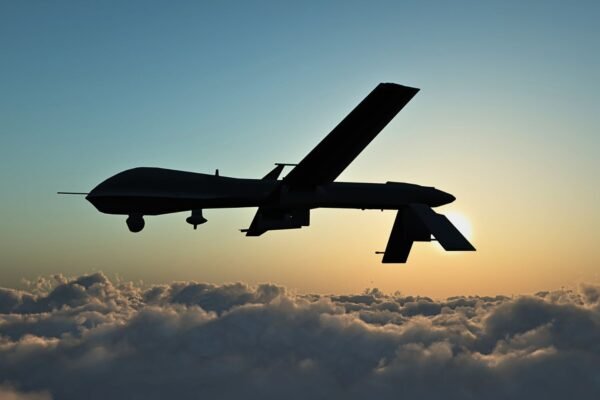
On 28 February 2026, the United States and Israel launched coordinated airstrikes on Iran, targeting military and government sites, assassinating Supreme Leader Ali Khamenei and other senior Iranian officials, and inflicting civilian casualties. The surprise attacks were launched while negotiations between Iran and the United States were still ongoing.
Israel’s defence ministry described the operation as a “preemptive strike,” with Prime Minister Netanyahu stating that its goal was to “remove the existential threat posed by the terrorist regime in Iran” and to “create the conditions for the brave Iranian people to take their destiny into their own hands.”
The nuclear justification, however, does not fully account for the decision to strike. IAEA Director General Rafael Grossi had stated, just days before the strikes, that most of Iran’s nuclear materials were “still there, in large quantities” despite prior US strikes on Iranian nuclear facilities in June 2025. This raises a central credibility question: if nuclear capabilities had been substantially degraded the previous year, what made escalation to regime decapitation necessary at this moment?
The answer is strategic rather than technical. The cumulative objectives — reshaping the regional balance of power, weakening the Russia-Iran axis, neutralising anti-Israel proxy networks, and asserting leverage over energy corridors — suggest the nuclear dossier served as political justification for an operation with broader ambitions. A third round of US-Iran indirect talks mediated by Oman’s foreign minister had taken place in Geneva on 26 February, just two days before the strikes — with Iranian and Omani officials notably more optimistic than their American counterparts about the prospects for agreement. Choosing to strike in the middle of active diplomacy has carried a structural cost that will outlast the immediate military campaign.
Succession and the Limits of Continuity
A Provisional Leadership Council stepped in immediately following Khamenei’s death, comprising President Masoud Pezeshkian, Judiciary Chief Gholam-Hossein Mohseni-Ejei, and Guardian Council cleric Ayatollah Alireza Arafi. The Assembly of Experts was tasked with designating a permanent successor as soon as possible.
Iran’s constitution allows for flexibility on timing, requiring the Assembly to act “at the earliest possible opportunity” without specifying a deadline — creating space to balance urgency against the security risk of naming a new leadership target mid-conflict.
On 8 March 2026, the Assembly of Experts chose Mojtaba Khamenei — the late supreme leader’s son — as the new Supreme Leader. The appointment of a dynastic successor carries its own vulnerabilities: it may satisfy hardliners in the short term while generating resentment within the clerical establishment over the longer arc.
More consequentially, the IRGC wields decisive influence in this process, and any successor will likely require its backing to govern effectively. External military pressure is not dismantling the security state — it is reinforcing its primacy. History consistently shows that foreign intervention strengthens securitisation rather than empowering reformists. The more likely outcome is tighter internal control, harsher repression, and the further marginalisation of any constituency favouring diplomatic engagement.
The Axis Without a Centre
Khamenei’s assassination has shattered the symbolic and operational architecture of Iran’s regional network, but fragmentation is not the same as dissolution. It means decentralisation — and decentralisation means unpredictability.
Hezbollah: Preemption as Survival
Hezbollah moved first. Hezbollah broke the November 2024 ceasefire, firing rockets at northern Israel in what it described as “revenge for the blood of the Supreme Leader.” Israel responded with strikes on Beirut’s southern suburbs, killing more than 30 people. Hezbollah’s calculus appears existential: with the Syrian land corridor severed following Assad’s fall and senior commanders already eliminated, acting pre-emptively may represent the group’s best chance to deter a larger Israeli offensive. Without coordinated command from Tehran, Hezbollah is likely to act more autonomously — and more aggressively — to preserve deterrence.
The Houthis: Solidarity Versus Self-Preservation
The Houthis face a harder choice. Rhetoric from Sanaa emphasises solidarity with Tehran, but the group confronts renewed domestic military pressure from Yemen’s internationally recognised government. Escalating against Israeli or American assets risks exposing Houthi-controlled territory at precisely the wrong moment. As the axis fragments, local survival calculus will increasingly dominate over ideological solidarity.
Iraq: A Theatre of Uncontrolled Retaliation
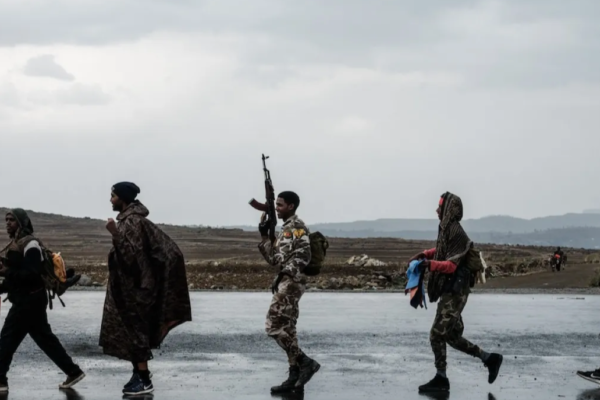
In Iraq, the danger is freelance retaliation rather than coordinated escalation. Iran-aligned factions within the Popular Mobilisation Forces operate in the blurred space between state authority and non-state action. With Iranian mediators removed, command discipline weakens. Any strike on American bases from Iraqi territory could drag Baghdad into direct confrontation with Washington without any deliberate decision by the Iraqi state.
Iranian Foreign Minister Abbas Araghchi’s insistence that Iran “does not require proxies for self-defence” signals both defiance and a quiet acknowledgement that coordination mechanisms are degraded. The strategic risk is no longer only deliberate escalation between states — it is miscalculation by fragmented actors operating independently.
The Hormuz Dimension
The Gulf’s structural exposure has become acute. Following Iran’s closure of the Strait of Hormuz on 4 March 2026, Brent crude surged past $120 per barrel and QatarEnergy declared force majeure on all exports. The IEA characterised the disruption as the “largest supply crisis in the history of the global oil market.”
The closure disrupted approximately 20 per cent of global oil supplies, alongside significant liquefied natural gas volumes, with analysts projecting potential additions of 0.8 per cent to global inflation if the disruption persisted.
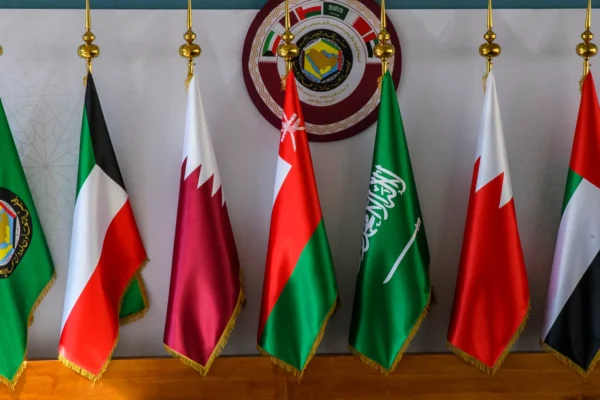
Gulf states hosting American military installations now occupy a position of acute strategic discomfort. Iran’s most effective leverage is indirect — threatening infrastructure and maritime routes to compel Gulf governments to restrain Washington. Yet those same governments are US security partners. This tension makes a unified regional response harder to construct and consensus harder to sustain when crisis strikes. The war has created a real, if narrow, opportunity for GCC states to articulate a new collective security framework — but its direction will depend entirely on who demonstrates political leadership and what end state they are prepared to advocate for.
Diplomacy’s Structural Damage
The broader casualty of the strike campaign is trust in multilateral diplomatic infrastructure. At the UN Security Council, Iran’s Ambassador Amir Saeid Iravani described the US-Israeli operation as “an unprovoked and premeditated act of aggression.” UN Secretary-General Guterres called the strikes a squandering of a chance for diplomacy, urging all parties to return immediately to the negotiating table.
Iravani subsequently made clear that while Iran remained “ready for negotiation,” the conditions following the strikes were not appropriate for a new round of talks, and that any attempt by Washington to dictate terms made negotiation impossible.
From a structural standpoint, it is difficult to identify a clear winner from this chain of events. The erosion of cooperative mechanisms that previously contributed — however imperfectly — to regional stability represents a systemic loss that extends beyond any single actor. The emerging order is not one without rules, but one in which multilateralism is increasingly fragmented, collective action more transactional, and diplomatic credibility harder to rebuild once spent.
Three Scenarios for the Near Term
Rapid Escalation
Decentralised proxy action, domestic pressure in both Washington and Tehran, and credibility demands on all sides could trigger expanding exchanges. Once begun, controlling the escalation would be extremely difficult. This scenario is the least likely in the immediate term but becomes more probable the longer the current configuration persists.
Managed Instability
Limited strikes followed by calibrated retaliation, sustained military signalling, and intermittent indirect contact. This is the most probable near-term outcome, but the margin for miscalculation is shrinking with each cycle.
Conditional Re-engagement
A narrower diplomatic framework focused strictly on nuclear constraints, with phased sanctions relief as an off-ramp, remains theoretically possible. The maximalist US demands documented in Geneva — including the destruction of Fordow, Natanz, and Isfahan and the transfer of enriched uranium to American custody — make this path increasingly narrow, but not yet closed.
Conclusion: Strategic Opportunity in Structural Disorder
The most consequential question is not which state prevails in the immediate military contest. It is which actors emerge from this crisis with their diplomatic credibility intact. States and institutions that preserve the capacity to mediate across divides — that resist being captured by either camp — will occupy the most valuable strategic position in the order that follows.
For Middle Eastern and African states, this represents a genuine, time-limited strategic opening. The Iran case exposes a deficit of trust and an increasingly crowded operational landscape in which state and non-state actors collide across cyberspace, maritime chokepoints, and proxy theatres simultaneously. MEA Institute’s analysis suggests that the institutions best positioned to shape the next phase are those that invest now in diplomatic credibility, multilateral architecture, and the kind of contextual expertise that transactional power politics consistently undervalues.
The untethering of regional actors from Tehran’s command is not the end of the crisis. It is the beginning of a more complex and less manageable one.