


Executive Summary
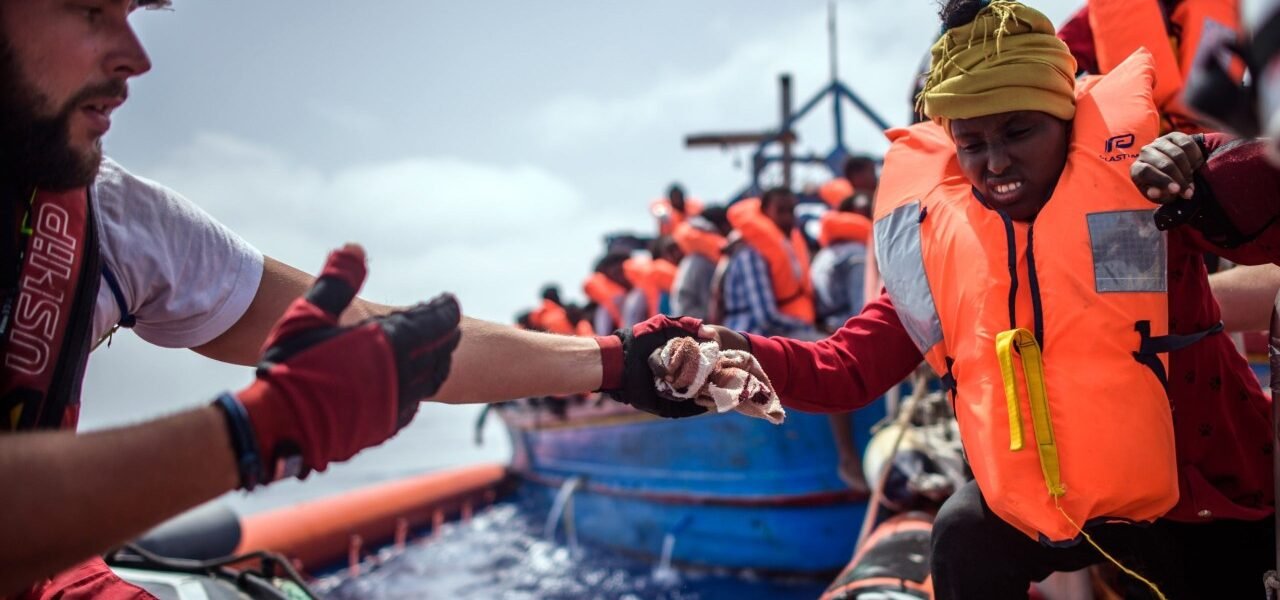
The Central Mediterranean remains the world’s deadliest migration corridor. Despite modest year-on-year shifts in arrival numbers and mortality figures, the structural drivers of irregular migration, state fragility in Libya, economic distress in Tunisia, demographic pressure across sub-Saharan Africa, and the absence of viable legal pathways remain firmly in place. European externalisation policy has succeeded in displacing rather than reducing flows, while generating a documented record of human rights violations that erodes the EU’s normative standing. This article examines the key data trends, the political economies of departure in Libya and Tunisia, the accountability gap in European-funded border enforcement, and the strategic policy choices that will determine whether the Central Mediterranean remains a permanent crisis or becomes a managed mobility corridor.
The Data Landscape: Flows, Fatalities, and the Limits of Measurement
Arrivals and Route Dynamics
In the first six months of 2025, 90 per cent of people reaching Italy via sea departed from Libya, accounting for 27,001 persons across 503 landings. Tunisia accounted for 7 per cent of departures, followed by Algeria and Turkey at 2 per cent each. By July 2025, Libya’s share had consolidated at 88 per cent of all arrivals in Italy.
This concentration matters. Libya’s dominance as a departure point is not simply a function of geography; it reflects the entrenchment of smuggling networks across the Sahel corridor and the effective collapse of alternative route suppression strategies. The sharp drop in Tunisia’s share of departures from 35 per cent to single digits reflects heightened interdiction operations under the EU-Tunisia deal, but interdiction is not deterrence. It is displacement.
Mortality: Lower Numbers, Higher Stakes
The marginal decline in recorded fatalities should not be misread as policy success. The Mediterranean saw an unprecedented number of migrant deaths in the first two months of 2026, with 606 recorded as of 24 February, more than double the 285 cases recorded over the same period in 2025. The trend line is not improving. The data collection infrastructure is shrinking, and what cannot be measured cannot be governed.
Libya: The Political Economy of Departure
Smuggling as State Function
Smuggling in Libya is not a criminal aberration operating at the margins of governance. It is structurally embedded in local political economies, linking southern Libya with transit networks across Niger and Nigeria. European engagement with Libyan armed actors from 2015 to 2017 achieved temporary reductions in crossing volumes, but at the cost of legitimising non-state armed actors and deepening their integration into local economies of violence.
The Accountability Gap
The blurring of accountability lines between EU funding, Italian operational support, and Libyan enforcement capacity is not a side effect of externalisation policy — it is its structural condition.
Tunisia: Gatekeeper State and the Politics of Partnership
The July 2023 Deal and Its Consequences
The deal was immediately controversial. Just before its signing, Tunisian security forces had unlawfully expelled over 1,300 Black African foreigners, including children, to border zones with Libya and Algeria — where at least 27 died. Human Rights Watch called the EU decision to proceed “terrible for human rights,” noting the absence of any specific protections for migrants and asylum seekers.
Implementation: Displacement Without Protection
The Tunisia model is now being replicated. The EU has launched a similar €7.4 billion deal with Egypt, and is pursuing comparable arrangements with Mauritania and Morocco — extending a border externalisation strategy whose humanitarian record is increasingly difficult to defend and whose migration management effectiveness remains analytically contested.
The Economics of Containment
A core analytical failure of European migration policy has been to treat irregular migration as a law enforcement problem rather than an economic one. Enforcement intensity does not reduce flows — it increases the cost and danger of crossing, concentrating the market in the hands of sophisticated smuggling operations. The IOM estimated the smuggling industry’s value at $370 million in 2023.
The route displacement pattern is well-established empirically. Tighter controls in Tunisia redirected flows through Libya. Enforcement in Niger pushed routes toward Mali and the Sahara. Each intervention has resulted not in fewer crossings, but in more dangerous ones.
Policy Scenarios and Strategic Choices
Status Quo: Managed Containment
Sustained irregular flows, a growing smuggling industry, rising mortality on less-monitored routes, and progressive reputational damage for the EU on its foundational human rights commitments. This trajectory is the current default. It offers short-term political cover for European governments managing domestic pressures, while outsourcing the human cost to transit states, non-state actors, and migrants themselves.
Legal Pathway Expansion
Opening regulated mobility channels aligned with European demographic and labour-market needs could reduce the premium on irregular crossing, disrupt the business model of smuggling networks, and shift migration from a security problem to an economic policy instrument. Italy has already begun offering expanded seasonal work visas to Tunisia as part of its bilateral migration cooperation — a nascent model that could be scaled. The political obstacles are real but not insurmountable: several EU member states facing acute labour shortages have clear economic incentives to support expanded legal pathways.
Regional Stabilisation and Development Investment
The deepest structural driver of migration across the Central Mediterranean is the gap between opportunity and expectation in North and sub-Saharan Africa. A sustained investment strategy targeting governance capacity, economic diversification, and youth employment in Libya, Tunisia, and key SSA origin countries would address root causes rather than symptoms. This trajectory requires a decade-long commitment and the political will to sustain it through electoral cycles on both continents — conditions that have historically been absent but are not permanently foreclosed.
Conclusion:
From Crisis Management to Strategic Governance
The Central Mediterranean migration challenge will not be resolved by enforcement alone. A decade of evidence confirms that containment displaces rather than deters, that externalisation without accountability generates liability rather than stability, and that the absence of legal pathways sustains rather than disrupts the smuggling economy.
The EU and its African partners face a strategic choice: continue managing the Mediterranean as a permanent crisis, absorbing the associated human, financial, and reputational costs indefinitely; or invest in the structural conditions — legal mobility, regional stabilisation, shared governance frameworks — that could transform irregular migration into managed mobility.
The Central Mediterranean is the deadliest known migration route in the world. That designation reflects not geography, but policy choices. It can change — but only if the policy framework changes with it.